Today's post might not appeal to everybody. It will be long, at least if measured by the number of photos (41), and somewhat painful for me to put together. That's because today's post is a survey of all of my unprotected bamboos to see how they're holding up to the winter so far. This isn't about the bamboos that are in the greenhouse, nor is it about the plants that I covered with plastic for the winter.
This is about the plants that are in the ground and exposed to the elements. The
harsh, bamboo-hating winter elements. If you grow bamboo you'll probably be interested in seeing how things are doing. If you don't grow bamboo you may still enjoy seeing how the different plants hold up during the winter. If you're not interested in plants at all, then you're probably out of luck today.
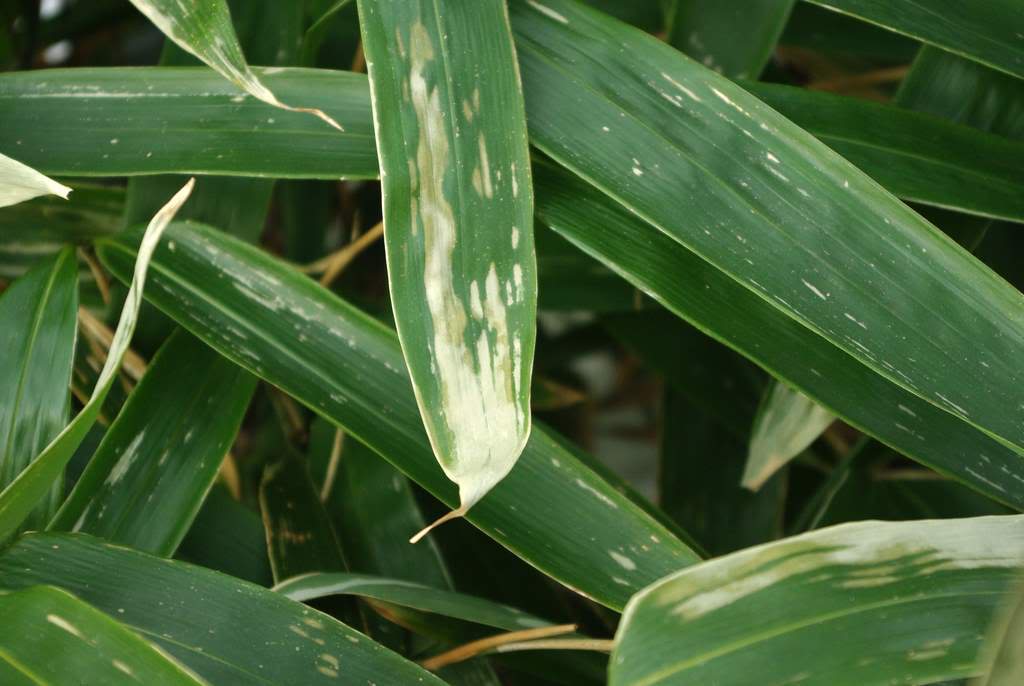
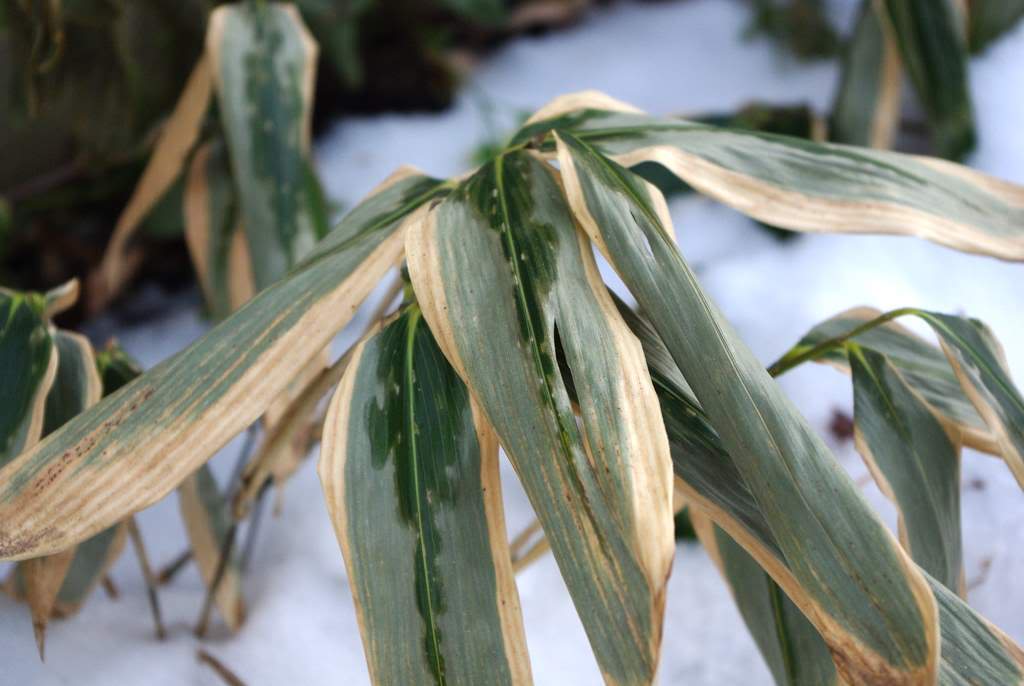
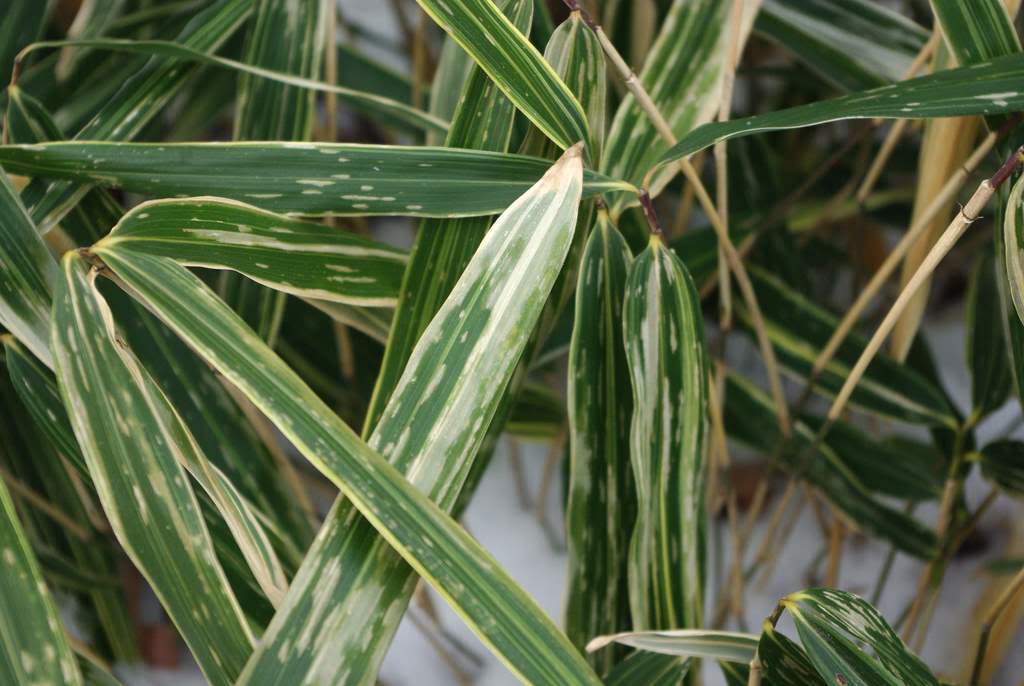
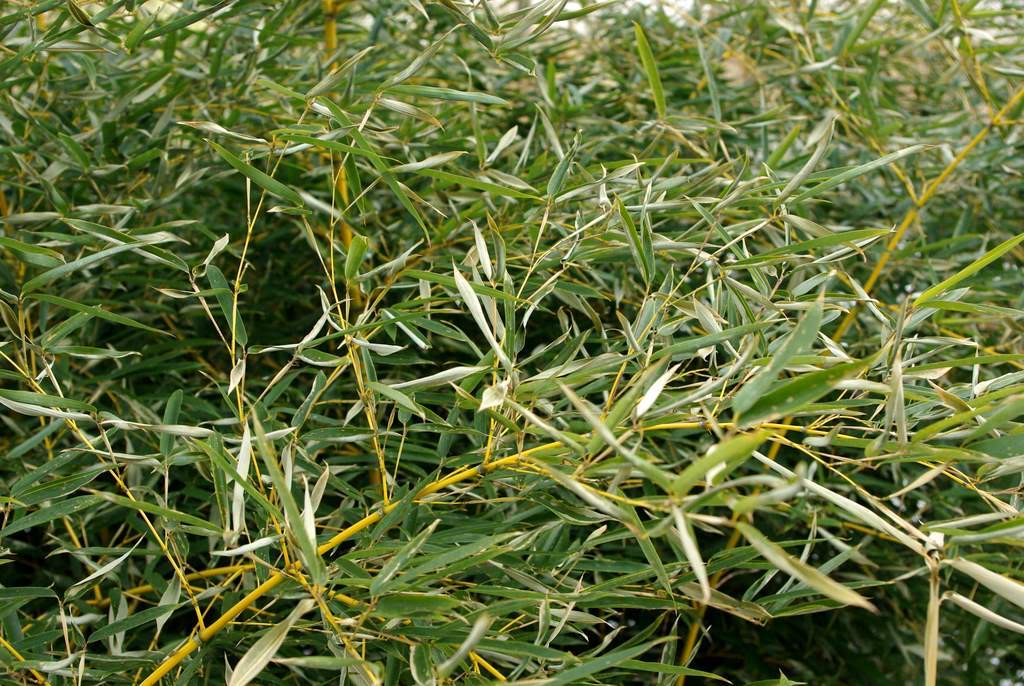
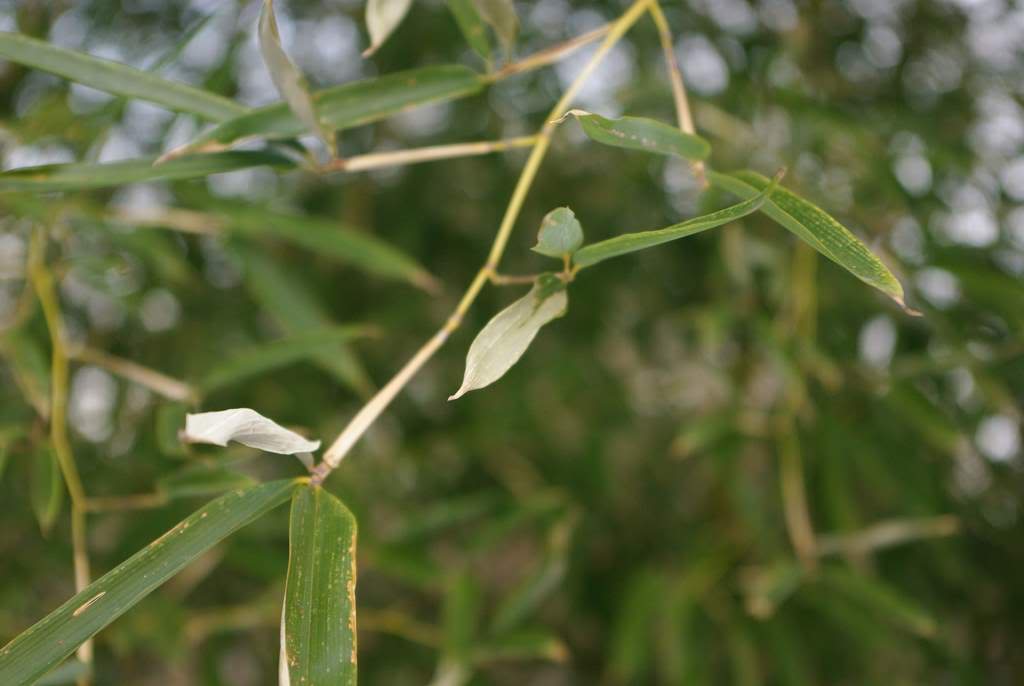
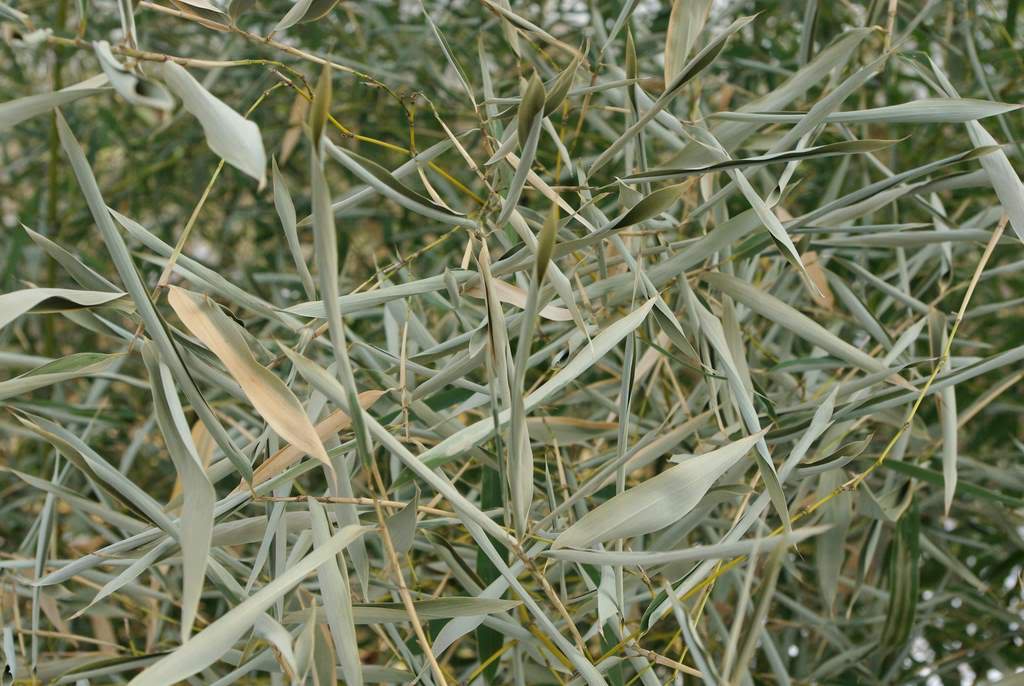
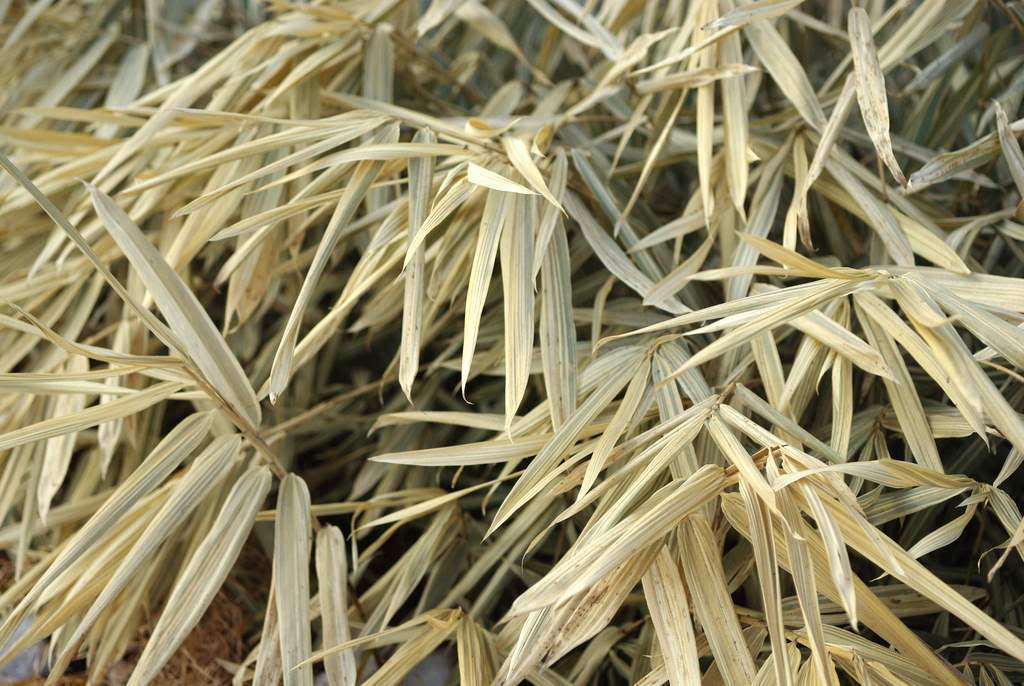
Before jumping into the photos I should explain that any dark green, flat, glossy leaves are fine. Leaves that are light green or grey, curled up, or brown -- those are damaged or dead leaves. So more dark green is good -- ideally we want the bamboos to hold all of their leaves through the winter with no damage. Besides adding some much needed green to the garden, a bamboo that has kept a good number of leaves has the best chance of "sizing up" in the spring -- producing thicker and taller culms than it currently has.
I'll be keeping comments to a minimum here, and let the photos do the talking. I grouped them by genus to help compare between different species of the same genus. In most cases there are two photos for each plant, an overview and a closeup. Enjoy.
 |
| Indocalamus longiauritus |
 |
| Indocalamus longiauritus - very little damage. Love this bamboo! |
 |
| Indocalamus tesselatus - I expect this to do better once it matures |
 |
Ind. tesselatus - there is green underneath, so
maybe I should protect this one next year |
 |
| Sasa tsuboiana |
 |
| Sasa tsuboiana - a moderate amount of burn |
 |
| Sasa veitchii - looks like it will get mowed down this year |
 |
| Sasaella masamuneana 'Albostriata' |
 |
Sasaella masamuneana 'Albostriata' - the damage
almost follows the stripes on the leaves |
 |
| Sasaella bitchuensis |
 |
| Sasaella bitchuensis - looks better than the tsuboiana |
 |
| Phyllostachys bissetii - quite cold-hardy |
 |
| Phyllostachys bissetii - but still shows some damage |
 |
Phy. bissetii #2 -- large division from mature
plant shows much less damage |
 |
| Phy. bissetii #2 - Actually, almost no damage at all |
 |
| Phyllostachys aureosulcata |
 |
| Phy. aureosulcata - shows just a touch of curled leaves |
 |
| Phyllostachys aureosulcata 'Aureocaulis' |
 |
| Phy. aureosulcata 'Aureocaulis' - shows a fair amount of curled leaves. |
 |
| Phyllostachys aureosulcata 'Spectabilis' |
 |
| Phy. aureosulcata 'Spectabilis' - some damage but not too much |
 |
| Phyllostachys atrovaginata |
 |
| Phy. atrovaginata - looks pretty good, but some leaf damage |
 |
| Phyllostachys glauca 'Yunzhu' - major damage |
 |
| Phy. glauca 'Yunzhu' - this is the north side; the south side is a little better |
 |
| Phyllostachys rubromarginata - very little damage if any |
 |
| Phy. rubromarginata - this was a large division from a mature plant |
Now an interesting comparison of three plants that are supposedly the same species, Fargesia dracocephala 'Rufa'. A shrubby, clumping bamboo that is quite cold-hardy.
 |
| Fargesia 'Rufa' #1 - my oldest bamboo |
 |
'Rufa' #1 - has some burn on top. I can't remember if
it gets this every year, or if this is more damage than usual. |
 |
| Fargesia 'Rufa' #2 - very little damage |
 |
| 'Rufa' #2 - just a few burned leaves |
 |
| Fargesia 'Rufa' #3 - is it dead? |
 |
| 'Rufa' #3 - not a green leaf in sight. |
That third 'Rufa' is the one I planted later in the season this year, and I'm really surprised that it looks the way it does. It's probably "topkilled", meaning that all of the above-ground growth has died. If so it will be a big disappointment. Since this is one of the earliest shooters in the spring (end of March), I won't have to wait too long to find out what's going on here.
Moving on to bamboos that I expect to have substantial to major damage each year...
 |
Semiarundinaria okuboi - looks like this every year
but leafs back out again in the spring |
 |
| Semiarundinaria okuboi - there is some green left in there |
 |
Semiarundinaria fastuosa 'Viridis' - most
of the upper leaves are fried |
 |
| Semiarundinaria fastuosa 'Viridis' - there is some green left in there though |
 |
Pseudosasa viridula - I expect this one
to topkill each year. It's just here as a test
which so far it's failed. |
 |
| Pleioblastus fortunei - this gets mowed down each year |
 |
| Pleioblastus viridistriatus - gets mowed too. |
That concludes the look at the cold damage so far this year. Unfortunately there's quite a lot of damage for this early in the year, as late January through February is usually pretty tough. That means I'll probably do another survey like this in early March or so but hopefully there won't be much more damage to show at that time.
Now I think I'll go look at photos from this past summer to remind me what the garden
should look like.















Wow. It's pretty sobering for a zone 9 guy like me to see this. I hope the rest of the winter will be kinder on your bamboos. Or maybe it doesn't matter now that most of the damage is done already. At least you have your greenhouse so you can feast your eyes on a sea of green whenever you need it.
Doesn't look bad to me. That's a little bit more damage than I have so far, but being in Missouri, the worst is probably over since you guys average around 10F warmer than up here on the northern border especially during the spring.
I hope the notion about the # of green leaves correlates directly to upsize because almost all my bamboos are still 95%+ green with so significant freezes in the forecast.
Any chance that rufa #3 was tc? I have 5 planted in a hedge and the first looks about like your #1 the others look good though
My rubromarginata completely top-killed last winter at 4F and it looks like my denudatas are also getting significant leaf burn, but I don't know if they are TC or not. Anyways it looks like all of my phyllostachys varieties are hardier than everything else in the garden.
F Nitida looks completely top killed, but it usually leafs back out by spring.
Nate: Don't know. Rufa #1 is TC (from Boo-Shoot) but #3 wasn't labeled as from them.
Steve: the worst is definitely not over yet. February is usually the coldest. Fingers crossed though.
My rubromarginata shows about 10-20% leaf burn most of my rufas are untouched to 10% I haven't surveyed much more than that I have a number of my plants buried in pots a and I have buried my T. tessalatus, scabrida and robusta tops under bags of leaves to protect them. my low temps have been -.2F and -.4F
Allan, what was the lowest temperature reached before taking those pictures?
It was approx 8ºF. The problem was not the low temp so much as the strong winds when it was in the teens. At least that's my feeling.
Thank you for the photos--I am an zone 5a Ohio. My bamboo did not do well this winter. Any suggestions on the winter damage? Would it be advisable to lop off the top sections down to the stock that looks green?
Sandy: I've got a more recent post showing this year's damage. In the next week or two check the branches for growing leaf buds. Search for "leaf buds" on my blog for an example of what they should look like. If they're not growing by then, the culms are probably dead and can be cut down. It's easier to cut the culms before the new shoots grow, but they'll probably start shooting about the same time.
I am in St. Louis where it got down to - 15 degrees plus dry and windy , my yellow stripe has been established for 12- 15 years and always remained green but this year about 90% of the leaves are dead and the stalks are all brown , I have shoots breaking ground BUT I have 800 to 1,00 stalks to cut down and somehow dispose of -- I am not happy
Anon: If I were you I'd remove the outer culms immediately, but maybe not worry about the inner ones -- they'll be difficult to see after the new culms grow in, right? Plus, have you taken a close look at any of the branches -- are any leaf buds starting to grow? I have a few plantings that look completely fried but new leaf buds are growing. You sure don't want to cut down any culms that are going to releaf.
Oh, and you definitely want to remove those dead culms before the new culms start coming in, or you'll be damaging those new ones inadvertently. Send me an email -- maybe I'll help you cut some culms!
Anon - same with me- I am in Indiana. I have three 4th year clumping bamboo that looks completely dead. This has never happened. Very disappointed - they were so beautiful. I will take Alan's advice and look at each clum before I cut it off.
"all the leaves are brown...."
is it best to cut the culms down?
Anon: only if the culms show no signs of growing new leaves! I have a more recent post on this that shows what to look for.
We have a small grove of Bamboo around Windsor. All the culms and leaves are brown. Some of the culms are a little green still at the base. There are new culms springing up which is a great relief. I am reluctant to cut the adults down yet .. at what point should I give up and cut them down. I see no sign of leaf buds (though not sure what to look for as we just bought this place last summer).
You need to look at my more recent posts about the bamboo damage suffered in the winter of 2013-2014: http://www.itsnotworkitsgardening.com/2014/04/bamboo-recovery.html