A real peach!

The tomatoes are starting to ripen! Oh, it's just a few here and there, and they are the smaller first fruits produced by the plants, but it's still exciting.

Especially since I have a few new varieties this year in my small veggie garden.

***


Did you know that there are more than 4,000 different tomato varieties? Or maybe it's 8,000... or 10,000. I can't remember the number I read, but believe me once you get into the thousands it doesn't really matter what numeral is prefixed -- you're never going to grow all of them.

This year I had access to a dozen or two different heirloom tomato seed varieties, and I pretty much just chose which ones to plant based on their names. 'Tangerine' and 'Garden Peach' both made the cut.

Once I planted them out in the garden, I lost or buried the small plant markers that were in their seedling pots, and I lost track of which of the two plants were which. I think I've identified them again though.


These are photos of a "regular" red tomato. It's not yellow or striped or "black" or giant or anything special, just a nice red tomato.

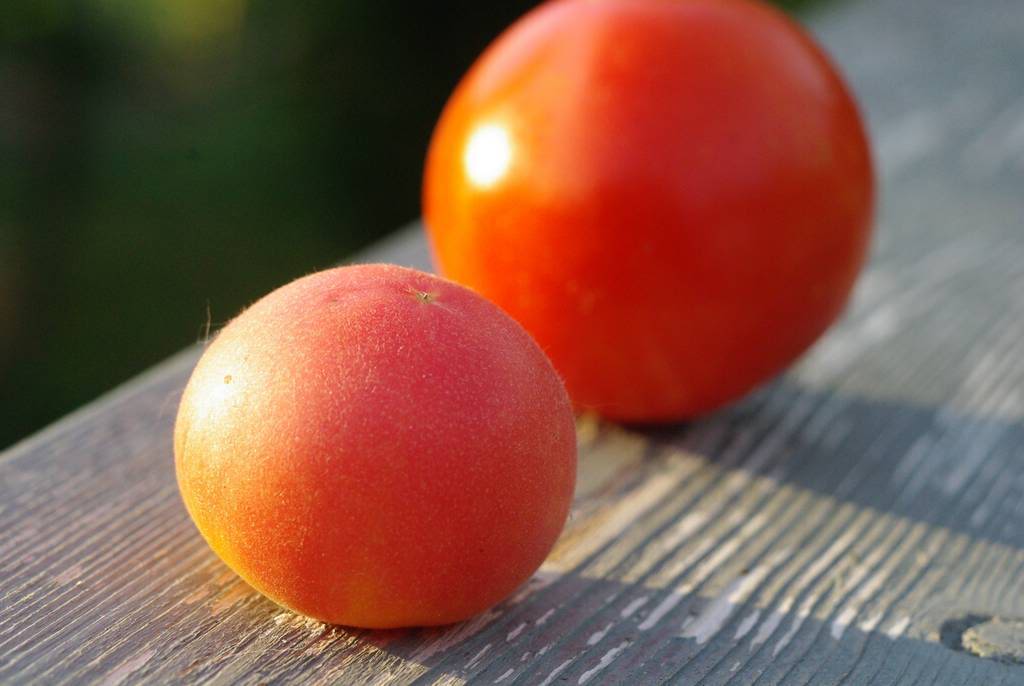
Here's what must be 'Garden Peach':


Can you see how fuzzy it is? It's quite fuzzy!

I imagine that many of these tomato varieties arise by accident (cross-pollination) in the garden -- I know that I always have "volunteer" tomato seedlings that I didn't plant popping up every year. I wonder how that conversation went...

"Honey look, a new type of tomato is growing in our garden!"
"Oooh, look how fuzzy it is! Let's eat it!"
"You read my mind -- there's nothing better than hairy fruits!"

I have to admit it's quite a pretty little tomato:


It's a bit pinker than it appears to be in this photo.

Small, though that's probably because it is the first of the fruits. I never remove the first blossoms when I plant my seedlings. I guess I should.


Unfortunately this plant appears to be in decline, as most of the leaves have withered and dropped. I don't know that I've ever had problems growing any tomatoes before, but I there are so many factors involved: first year I'm using manure, first time I've tried this variety, there's a HUGE tomato variety growing right in front of this one possibly blocking most of its sunlight.

I took some cuttings (I hate throwing away large tomato branches that I prune off) which have rooted in water, so hopefully I'll have another one of these plants soon, as I'd like to see if these fruits get any bigger.

Now to see how these little fuzzies taste!

.

Read more...
lazy wins again

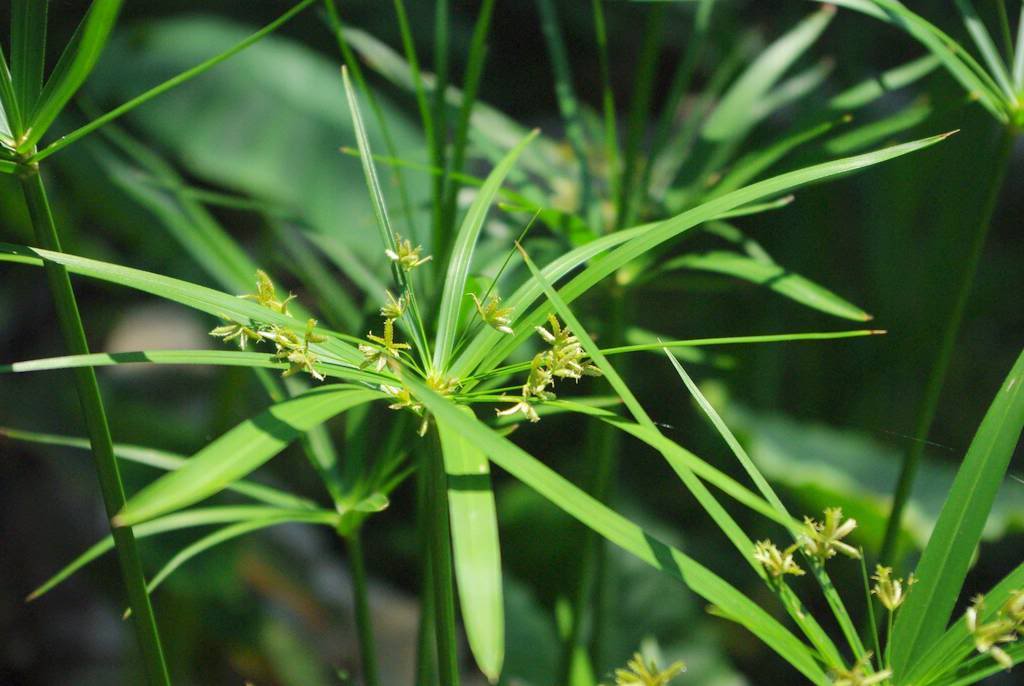
I've been spending a lot of time focusing on the pond lately: looking for the fish, watching the toads (there are already tiny tadpoles swimming around), removing string algae, monitoring the progress of the plants around the perimeter. The plants that are in pots in the water though, I haven't been paying enough attention to them.


I had a feeling they needed to be repotted, as they went into relatively small pots this spring. So when I pulled two of them out of the water last weekend not only did I see that it was indeed time for more space, but I also got a surprise.


Read more...

Spider flower

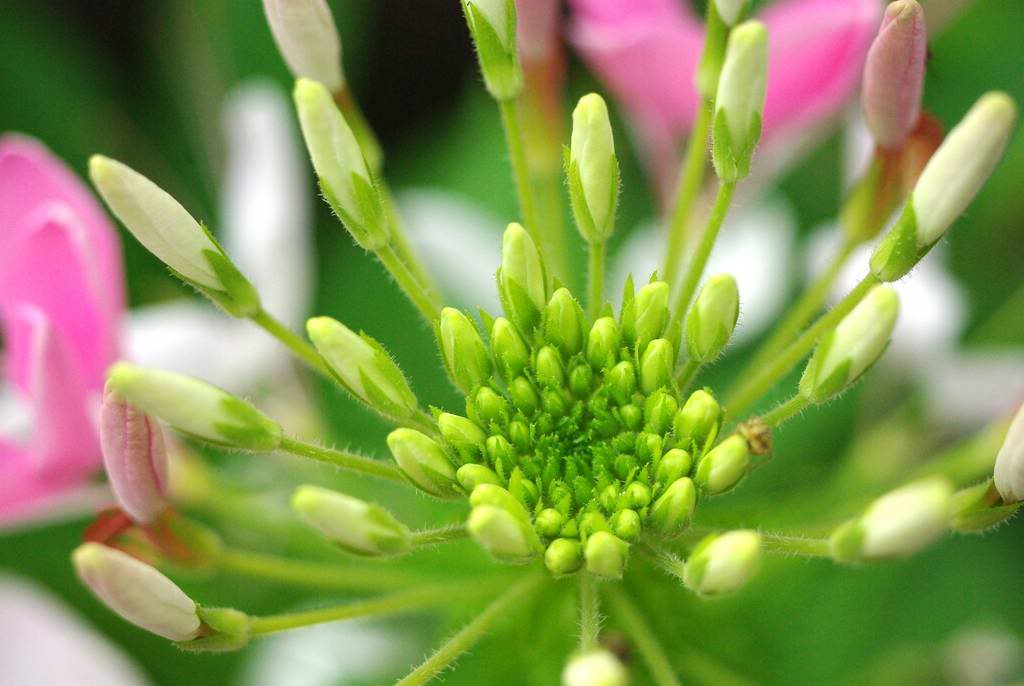
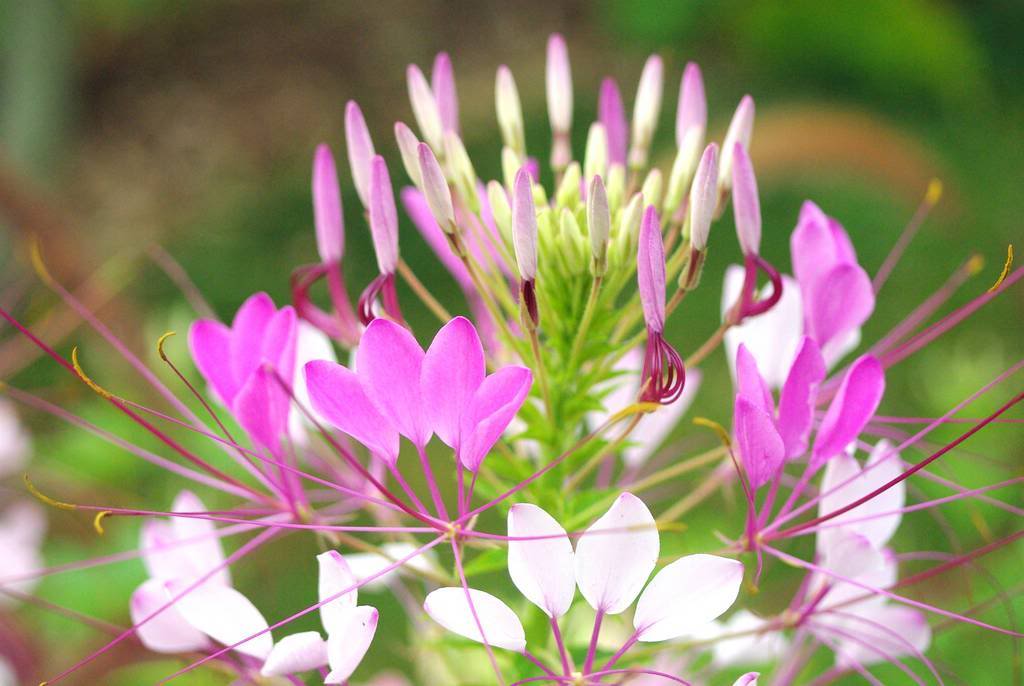
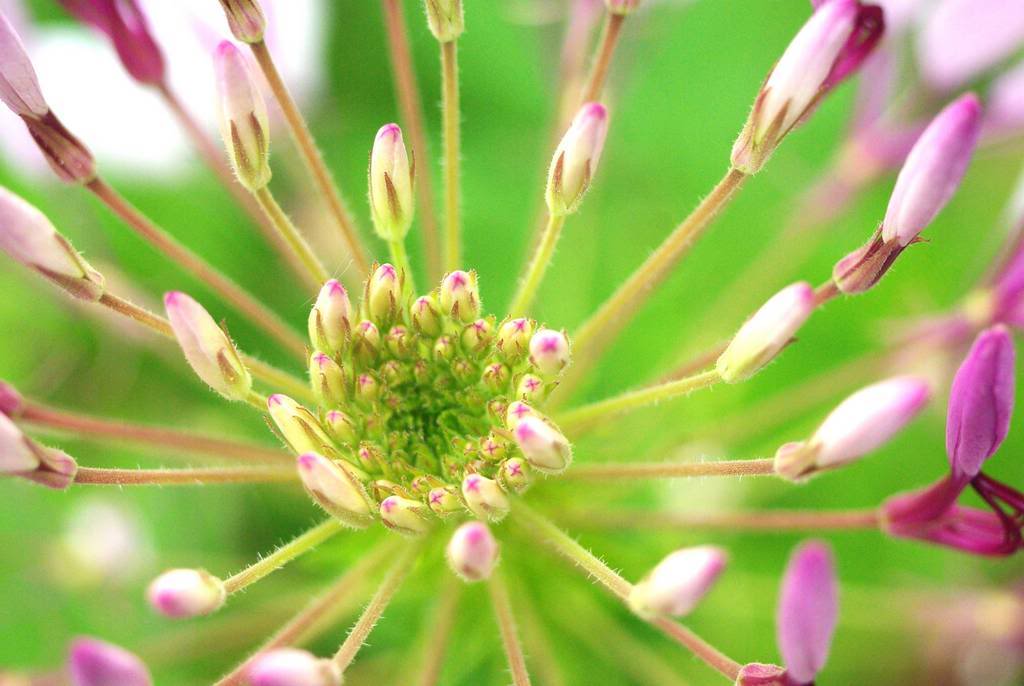
Cleome or "Spider flower" is one annual that once you have you have forever, at least in my experience. I planted just a couple of these when I first started gardening, and I had volunteers for several years before they finally gave out.


In the last couple of years I've decided that I missed these wonderful, ever-blooming bee magnets and planted a lot of them. Since I'm not the best at thinning seedlings, I ended up with a pretty decent (and overcrowded by some standards) planting this year. No effort, big results -- just how I like it.

***


These will start looking a little ragged later in the summer if I don't do some pruning on them, but that's not a concern yet.


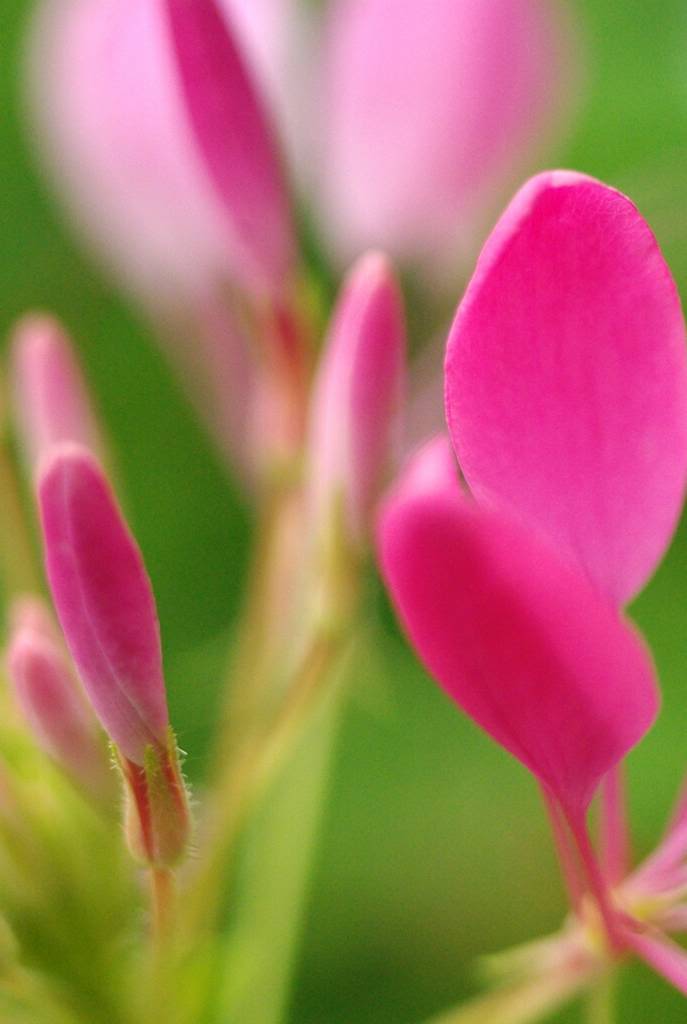
Most of the petals fade to white, but there are a few that keep their colors. I don't remember what variety of seeds I planted, but I know there were white, pink, and purple ones that seem to have all mixed together now.


Here's a longer shot of the bed:


I simplified this planting area this year while still adding some new plants. From front to back there is a Shibatea kumasaca bamboo, the cleome with some purple fountain grass and Agastache foeniculum mixed in, then some hardy bananas (Musa basjoo) surrounded by elephant ears (Colocasia esculenta). That's it for the entire bed. (There's space for one more plant. I'm thinking of another elephant ear, but might do something else too. In fact, I may plant right after I post this.)

Cleome is the highlight right now I'd say.


There's another small cleome bed across the path. It was cleome last year and I wasn't sure what I wanted to do there this year. The seedlings took longer to germinate than those in the other bed did, so for a while this spring I thought I had an empty bed -- a clean slate to work with.


Since I couldn't make up my mind what to plant and delayed too long, it's now a cleome bed again. They're a bit behind the flowers in the other bed, but will soon start blooming.

This just ensures that the bees will have cleome blooms for a longer time, right? Almost like I planned it.


Cleome flowers all summer long will be fine by me.

.

Read more...

One plus two toads

The other day and night we finally got a decent, soaking rain here. Things had been getting pretty dry and tired, but the much-needed rain really helped wake things up. Especially the toads, who I haven't heard for quite a while but started calling that evening and continued the next morning.


What I found was one land-lubber toad, sitting and watching the pond. He was out here pretty much all day. What was he doing? Waiting, as far as I can tell.

Read more...

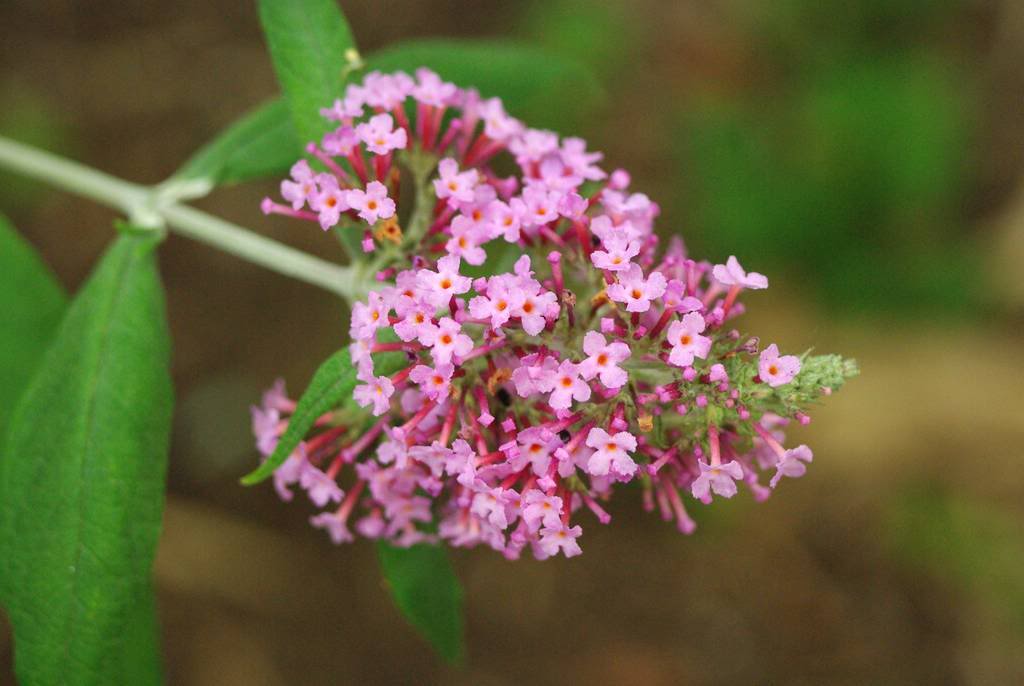
Butterfly Bush

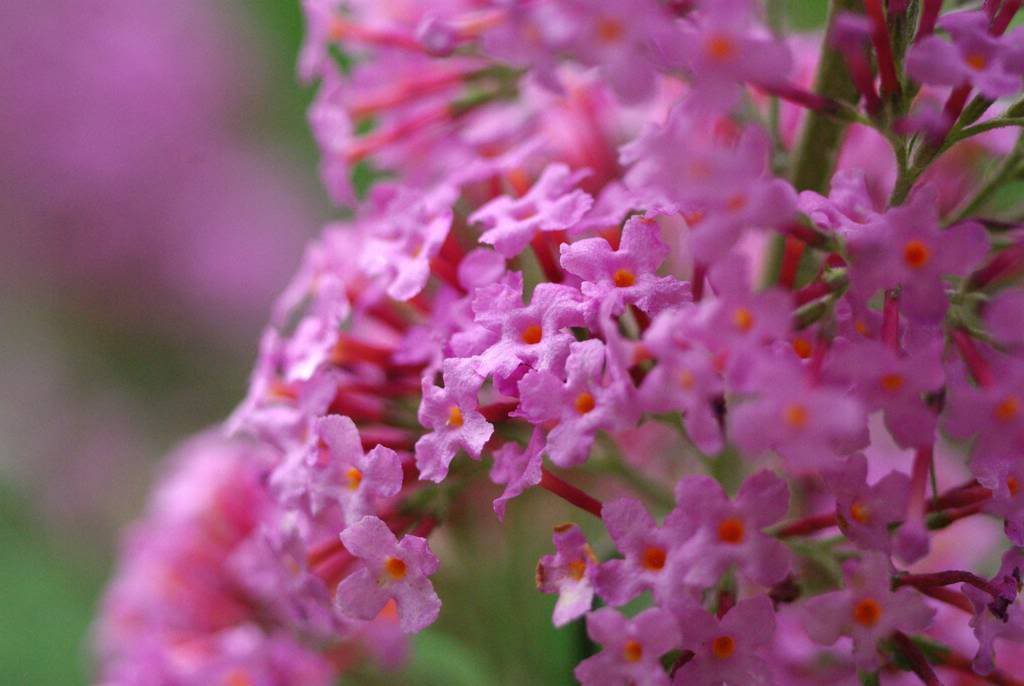
When I was a child, long, long before I was ever interested in plants I remember seeing a plant catalog that my parents received. It probably came in the Sunday paper and was mixed in with the comics and other color-printed flyers -- I can't think of any other reason that I would have seen it. It was one of those lower-quality printings, with over-saturated photographs and illustrations of many of the plants. The only plant I remember seeing from this catalog was a "butterfly bush". I can't be certain of the exact wording, but it said something like "produces big, fragrant blooms all summer long, attracting butterflies from all over the neighborhood". It sounded too good to be true to me, and why didn't they have a photograph of this amazing plant?


Decades passed and one of the first plants I ever bought for my garden was a "butterfly bush", or Buddleia davidii. I have to say, that ad from long ago was right!

***


This is not a native plant, but the butterflies simply adore it. There aren't many of them flying around right now -- their time is later in the summer -- but these blooms are still so wonderful to have around.


So fragrant... a sweet scent, not overpowering though.

I breath deeply of this plant whenever I walk past.

I have two named cultivars: 'Pink Delight' and 'Dark Knight', and also some seedlings that are either more like the species, or some cross between my two varieties.


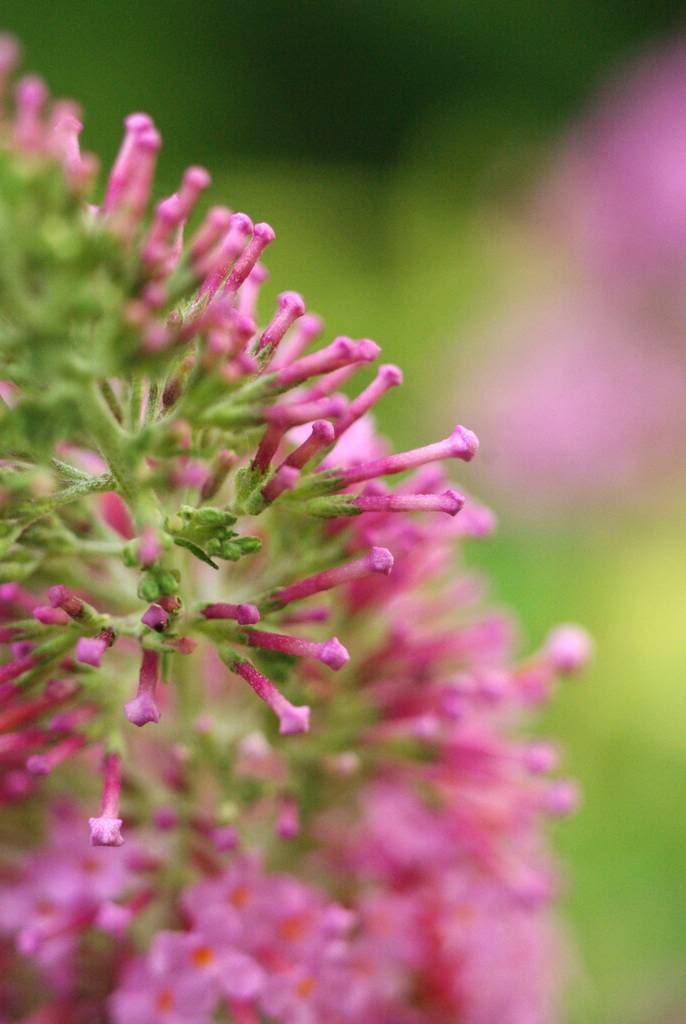
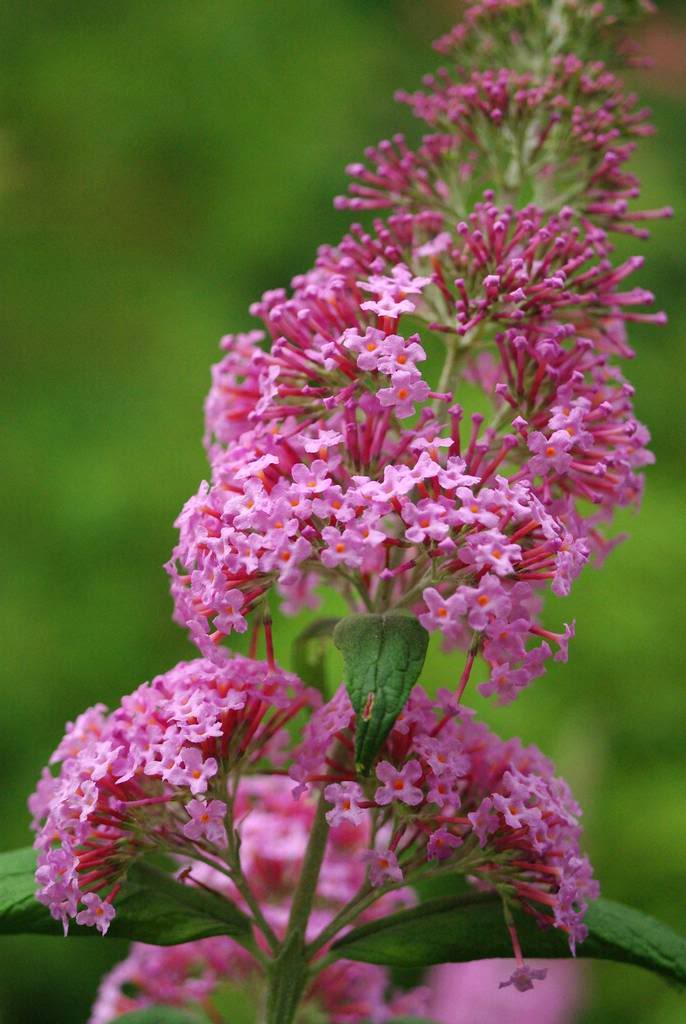
This seedling has huge flower spikes, almost 24" (60 cm) long:


I often think about getting a white variety, or one of the yellow ones. It seems wrong to buy another one of these though, since I always have seedlings available. They also propagate very easily from cuttings.

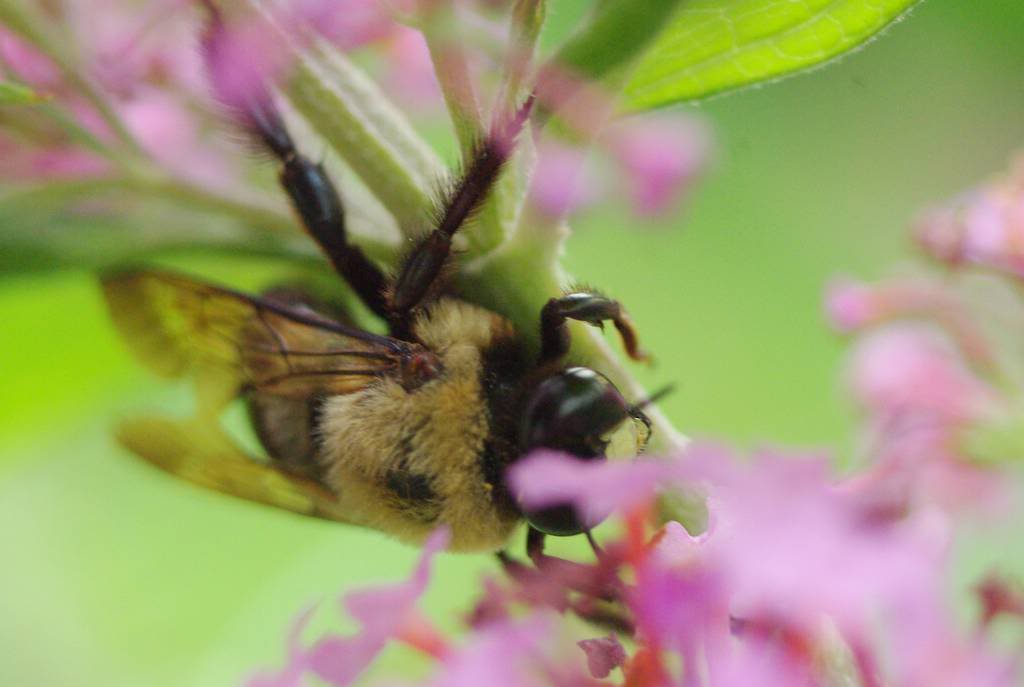
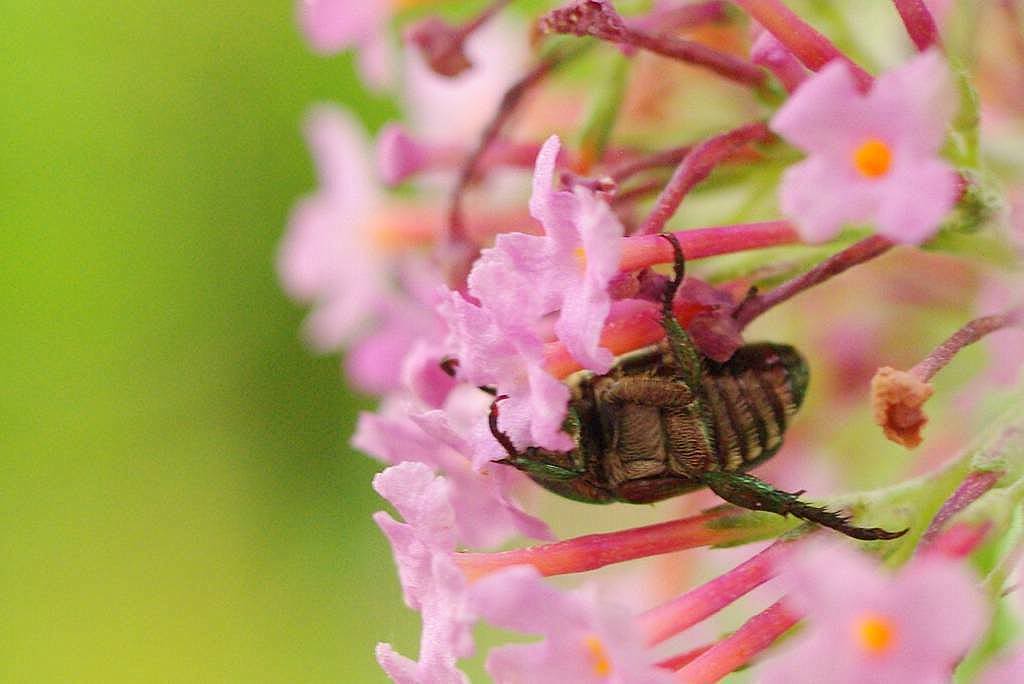
Lots of different insects love these flowers, not just the butterflies. I often find bees that have spent the night in the blooms:


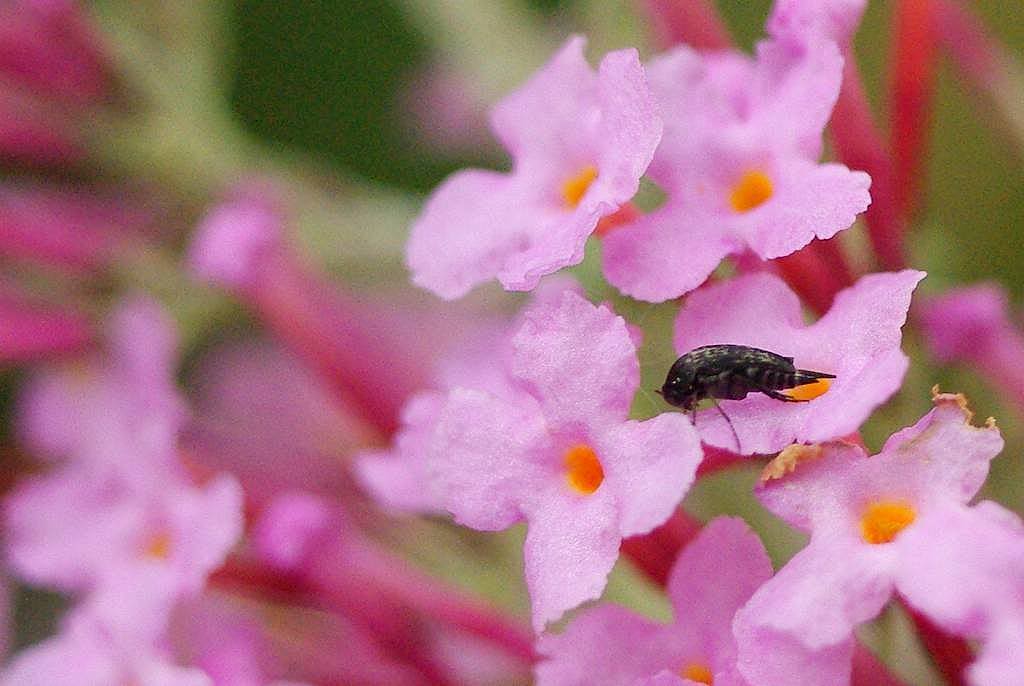
Also some not-very-welcome visitors (Japanese beetles):


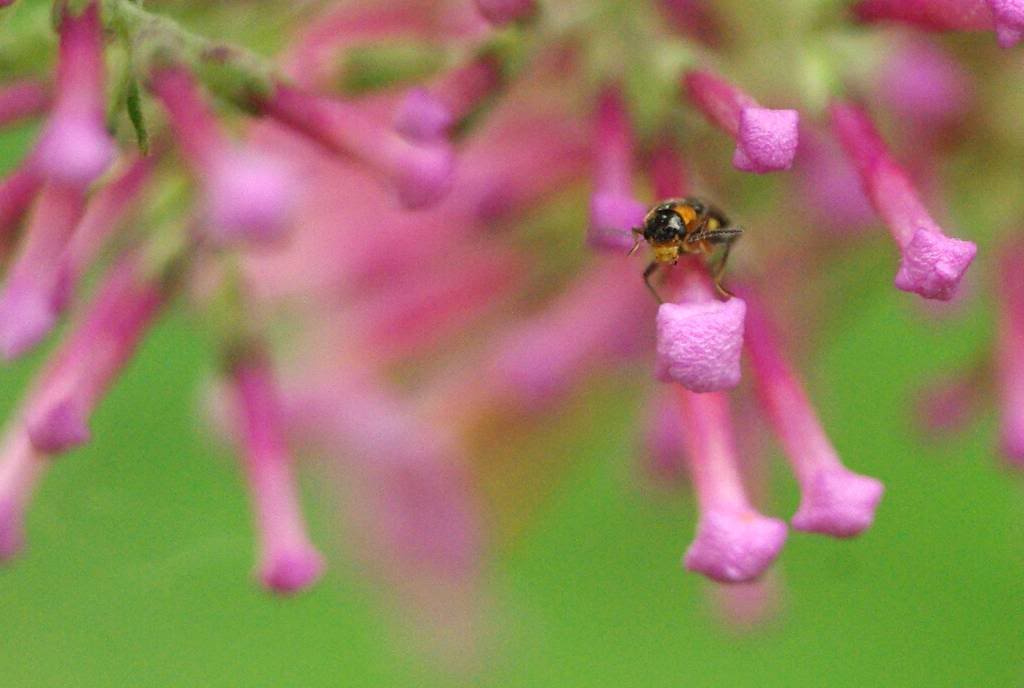
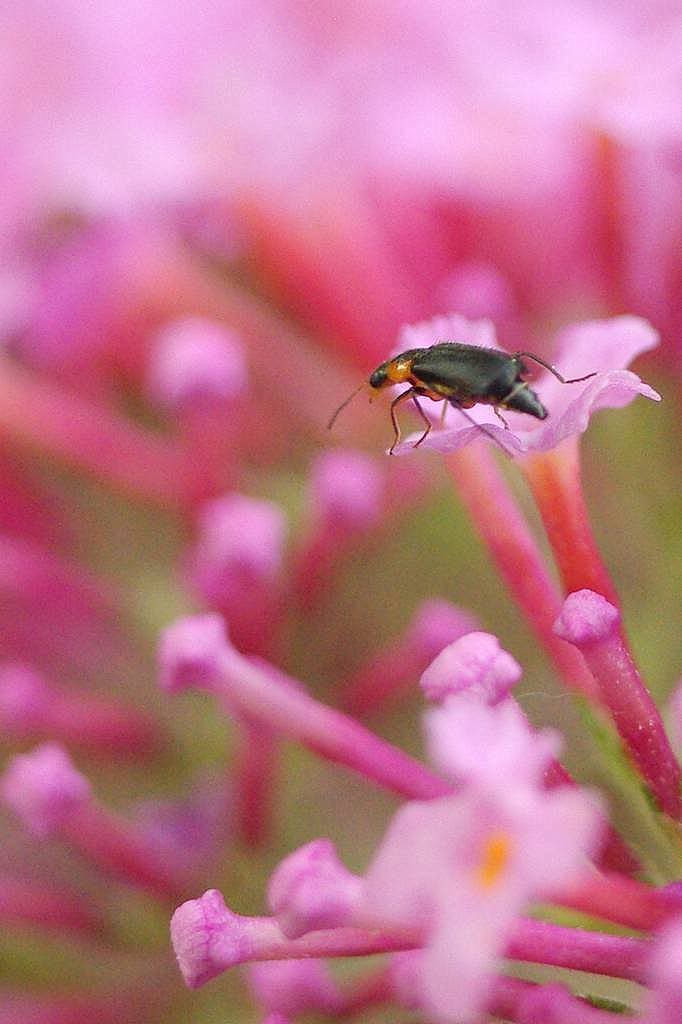
Lots of tiny insects too:


It's because of these little guys that I release several baby mantises on these shrubs each year:


The flowers fade after a couple of days, but I remove the faded blooms every week or two to keep the blooms coming and the reduce the number of volunteers I have popping up everywhere. These things will produce tons of seeds if you let them!


The blooms that come later in the summer are smaller, but there are more of them.


I cut my butterfly bushes down to the ground late every winter, so I don't end up with huge, woody messes -- I get all new wood, plenty of blooms, and shrubs of manageable size. They still reach 7' (2m) or so tall, but that's perfect for me.


And this plant is perfect for my garden!

.

Read more...
They're back.

June is usually such a nice month in the garden in St. Louis. Sunny, warm but not too hot, low humidity, breezy. (Except this year, when we're getting midsummer-like days mixed in.) All of the plants are really hitting their strides at this time too.


Unfortunately June also sees the return of a big pest: the Japanese beetles.

***


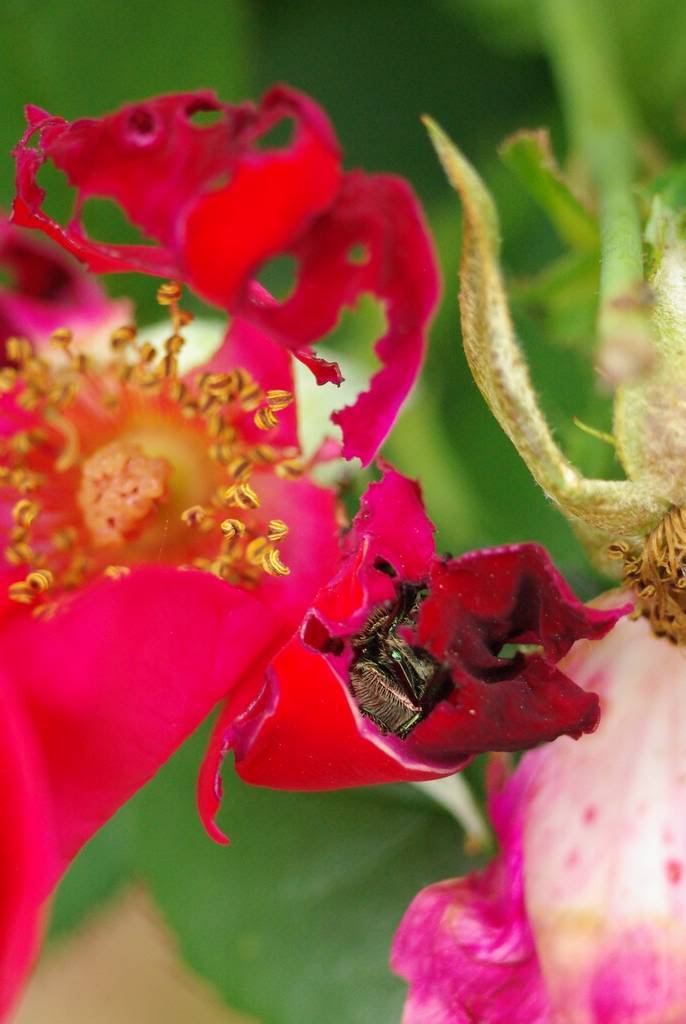
Their preference is for rose petals, at least in my garden.


They're so attractive -- if they weren't such pests I'd love having them around.


Rose petals are not the only thing they eat, as my neighbor has a linden tree whose leaves the beetles just love to munch.

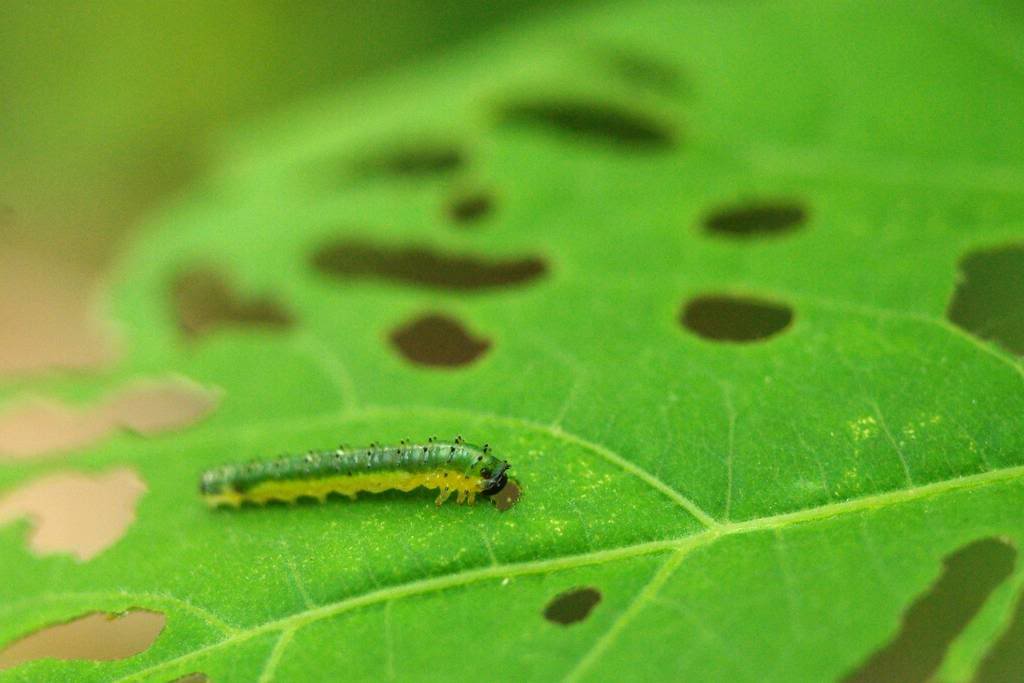
When I saw this mallow leaf, I thought that the beetles had found a new treat:


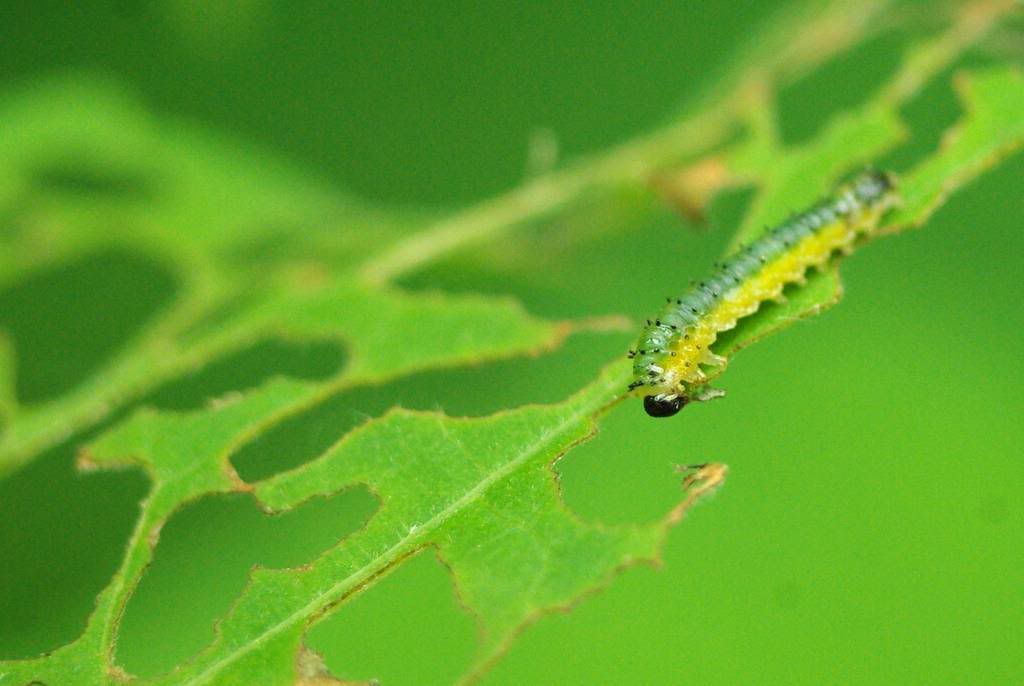
Since I just got this plant a couple of months ago I'm not sure what to expect from it. It could very well be high on the list of beetle favorites. A closer look revealed another answer though:


I'm not sure what type of caterpillar these are yet, but their damage is limited to a few leaves (and this is a large plant) so I'm going to leave them to it while I research what they will become -- might be a very cool butterfly or moth.


Besides, with so many beetles around a few more holes in some leaves isn't going to matter.


The answer for the Japanese beetles for me is a walk around the garden each morning with a bucket of soapy water:


Knocking them into the bucket is easy -- sometimes you just need to hold the bucket below them and move your hand over them, as their impulse when threatened is to fall to the ground.

Doing this in warm parts of the day is almost impossible, because they are much more active and fly away.

Good thing morning is my favorite time in the garden anyway!

(Read my previous posts about Japanese beetles here.)

.

Read more...

National Botanic Garden

I recently had a few hours to spend in Washington DC, and although I did breeze through a few museums (Native American, Air and Space, Art) on that hot and humid rainy day, I made sure to make it to the National Botanic Garden.


From the outside and the map it looked relatively small (compared to the Missouri Botanical Garden), but I knew I wouldn't be in DC again soon -- it had been 20 years since my last visit -- so I was excited and eager to see what it had in store for me.

Read more...
Quick look

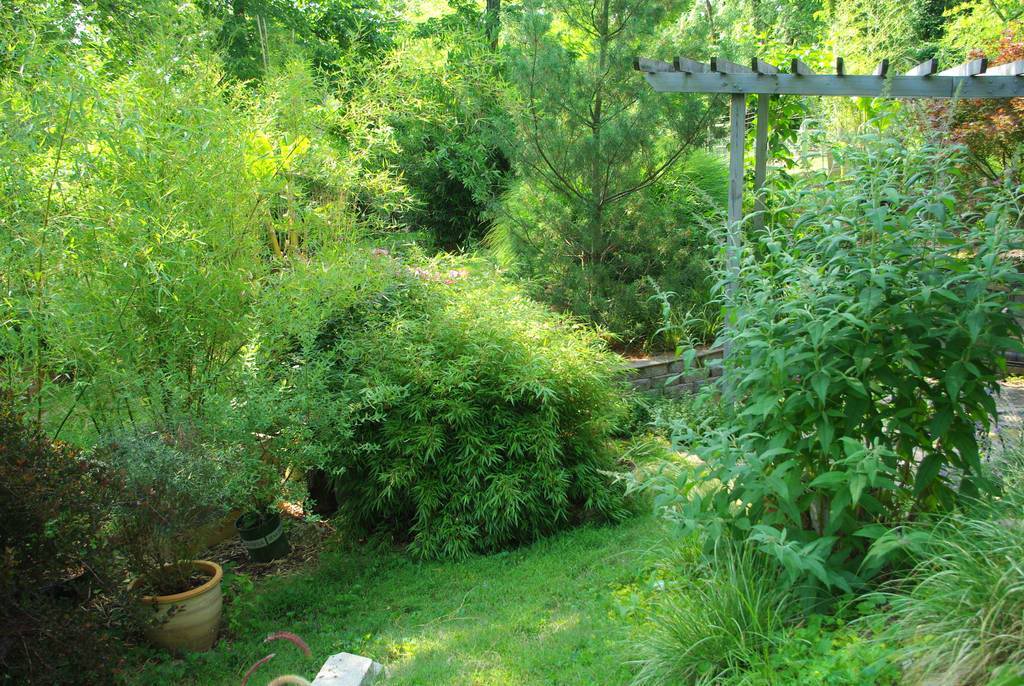
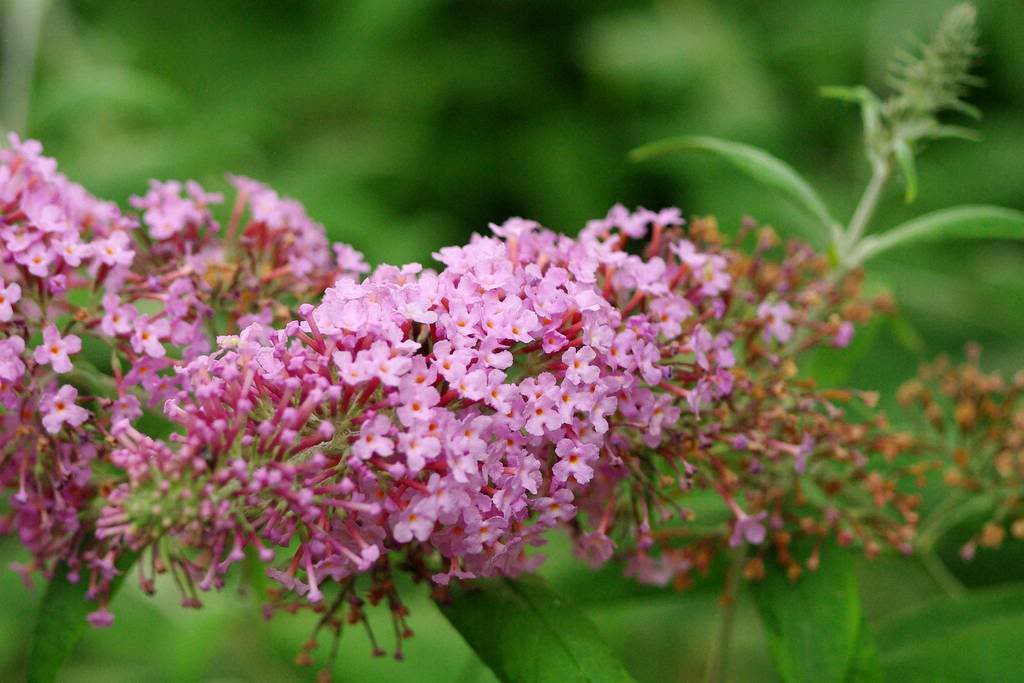
I've got lots of things I want to get done in the garden this morning before the temperature hits 95F, so I thought I'd just post a few of the "survey" photos I take once in a while.


I use these to track the progress of my plants over the year, as well as comparing past years.

Read more...
Do bees like pollen?

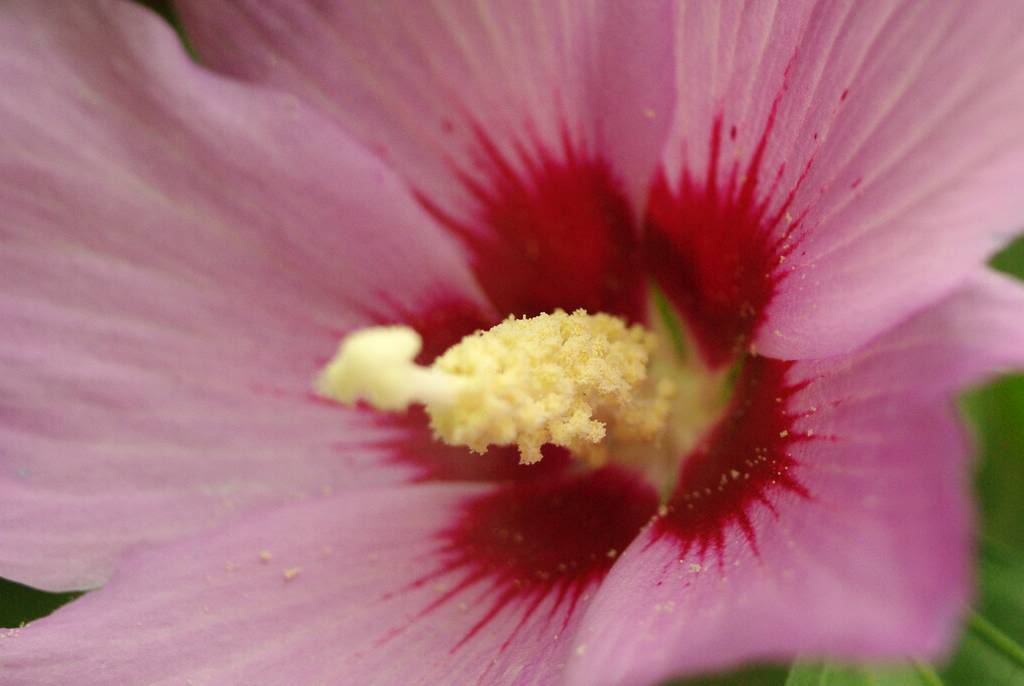
The Rose of Sharon (as my mother always called it when I was growing up, years and years before I started growing my own) is blooming.


There's something missing from this photo though... something just doesn't look right.

Read more...

  © Blogger template Shush by Ourblogtemplates.com 2009

Back to TOP