Note to self: remember!

Part of the reason I have this blog is so I can remember things that I've done in the garden, both the good and the bad. Late winter is a time of much dreaming, planning, and optimism in my garden, and it's easy to forget about some of the problems from last year. I'm writing today as a reminder to myself.


Yes, I love the cypress vines, almost as much as the bumble bees and hummingbirds do. Their lacy foliage, their bright red (or white, or sometimes pink) flowers spreading color and cheer wherever they grow. Yes, I admit they look quite good growing up the veggie garden fence...

Read more...
Trying to guess

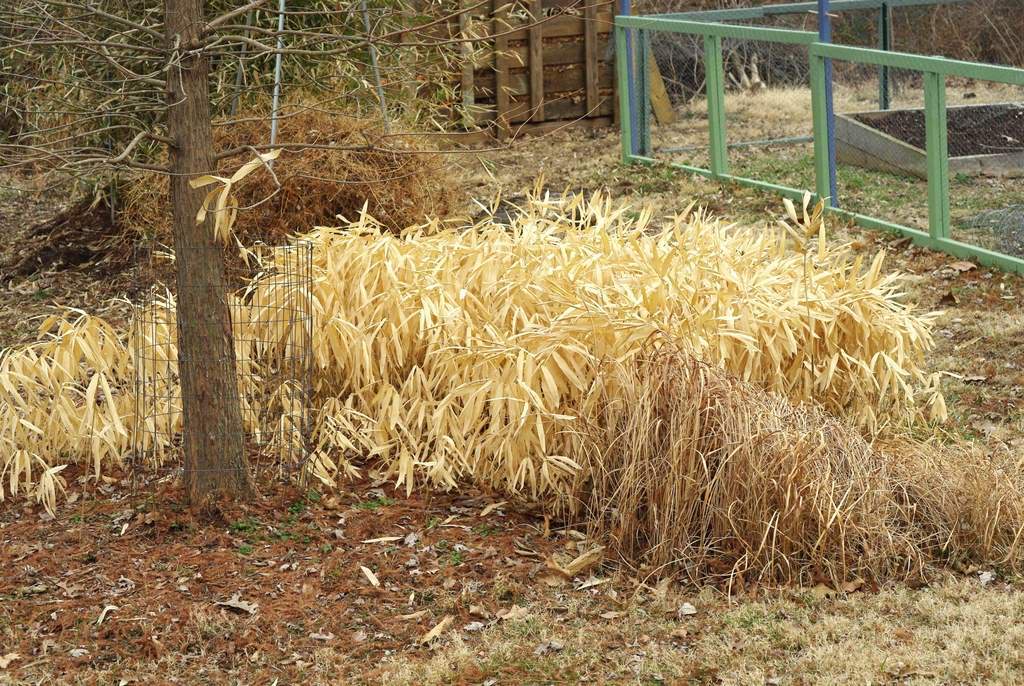
Late winter once all of the harshest weather is past us is the time that those of us gardeners who have bitten by the "bamboo bug" and live in colder climates try to assess the condition of our most-loved plants. I've already shown how at least one of my bamboos has been affected by our cold, windy winter, and other ones are pretty obvious:


This ground cover species (Pleioblastus viridistriatus) is completely top-killed and will be mowed down soon. This is expected every year with this species, and it will produce new shoots and lush foliage once it warms up, so there's no worry about this plant. For the plants that I want to size up each year and produce thicker, taller culms, there can be some guessing and worry though.

Read more...

An update on the Semps

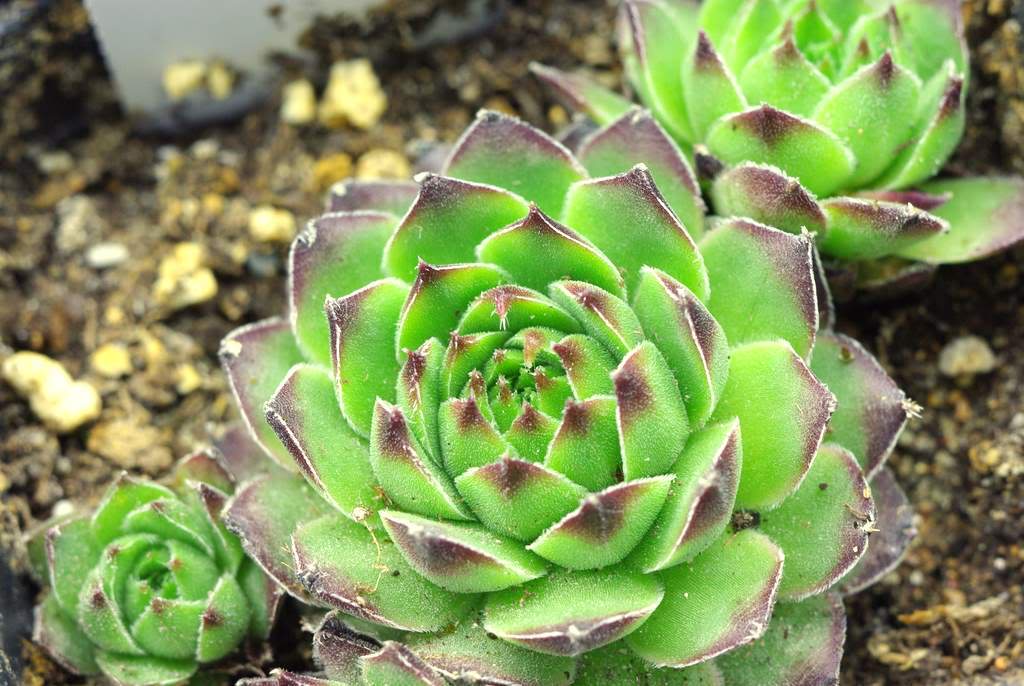
Just under two weeks ago I received a large order of new plants: a few sedums and two dozen sempervivum species and hybrids. I potted them up right away and put them on my growing table indoors under lights. They were shipped bare root and were a little dehydrated, but it didn't take them long for them to wake up after potting.


Although each of these varieties of "hen and chicks" are nice plants on their own, when viewed together their differences in colors and textures are really enhanced.

Read more...

Still tiny, getting an attitude: cactus seedlings

It's already been a week since my last cactus seedling update, although it seems like I just wrote that post. There has certainly been some action, so I'm going to jump right in and show you.


You can see that each tiny plant now has a little spot of fuzz on it. That photo was taken on the 21st. If I had a bionic eye or a good magnifying glass I might be able to see what's happening better...

Read more...

A project comes off the list -- sort of

Every gardener has a list of projects that they'd like to do each year, don't they? I know I do. In fact, my list of "things to do this summer" seems to stay quite similar every year, as I never get around to all of the items. One task that's been on that list for a few summers is "make more hypertufa pots". Hypertufa is a lightweight concrete that is easy to work with and great for lots of different garden projects.


A couple of years ago I made these small balls out of hypertufa, and they add a nice sculptural element to one of my planting beds. But I want to make something more useful, and what's more useful than pots? I never have enough sturdy pots.

Read more...

Seeing green, so easy

This is the time of year -- late winter -- where even though there's a lot of brown in the yard, there are touches of green mixed in, and they're a welcome sight. Sort of. I'm not talking about budding trees and shrubs, spring-flowering bulbs, or any other desirable early-wakers of my garden. No, I'm talking about weeds.


This is a great time to walk around the yard and see what sort of weed problems there are. If your garden is anything like mine you're going to have a really hard time finding any weeds at any time of year (cough, cough) but it's worth a look right?

Read more...

Bamboo: not indestructible

Most people who have only a casual acquaintance with bamboo think that it's indestructible, that you can use bamboo cane for almost anything. Certainly that's true to a point, because they do build pretty impressive structures out of bamboo (not in the US, but in other more bamboo-centric parts of the world). Houses, scaffolding, bridges -- there's almost nothing you can't build with the right bamboo canes.


The key though is knowing which canes are the right ones. Bamboo culms (they're typically called "culms" when still attached to the living plant, but "canes" when they're cut and removed) may seem quite strong right away, but  it takes time for them to harden and strengthen.

Read more...

Tiny garden discovered, tiny garden maintained

I've got a lot of different planting beds in my suburban garden: veggie beds, perennial beds, plantings of bamboo, huge ornamental grasses. Many of them are pretty large beds, but I've got some small areas too, like the planting pockets around the stream. My smallest "garden" though has to be the cracks between stones of my flagstone patios. I've never really thought about them as a garden until recently -- they've just been the gaps between the stones before.


Which is a strange oversight on my part, because I've put much effort into making these crevices more than just something to hopefully not trip on. I've planted mosses, thymes, and most recently sedum in the hope of softening and greening up these hard stretches of rock.

Read more...

Applying some elbow grease toward rhizome control

I don't really know exactly what the phrase "elbow grease" is supposed to mean, except that it means to exert a bit of physical effort, and that's what I did today. (It doesn't make much sense to me, sort of like keeping your "eyes peeled". Um, okay.) Anyway, some focused exertion is what is needed to keep the rhizomes of running bamboo in check in a suburban garden.


Today I did some of that. You won't see any photos of the process of my digging as it's quite difficult to swing a mattock and shoot a photo at the same time.

Read more...

  © Blogger template Shush by Ourblogtemplates.com 2009

Back to TOP