Onions get a new bed

My veggie garden area is pretty small -- the fenced area that is safe from herbivores is 13' x 13'. You may remember that I recently created some new raised beds in this area: 3 beds that are 4'x6', and one that is 4'x4' for a total of 88 square feet of planting area. That's not a lot of space, so to give me more options I plant veggies in containers but also use the area just outside the fence, planting things that rabbits, deer, and woodchucks don't eat.


Chives, horseradish, garlic chives, basil, and onions. These are all pretty safe from the critters, so they live in the "wilds" outside the protected area. The chives are perennial of course, as are the garlic chives -- which I've got zillions of now -- and the horseradish. The onions I'm planting today.

Read more...

Just some colors

Too often I think of the garden as a list of jobs that need to be done: weed this bed, plant those seeds, prune this shrub, mow the lawn. Other times I think of it as a collection of plants: the flowers, the shrubs, the bamboo, the edibles. Sometimes I like to forget about the jobs, and even forget about the plants, and look at things differently. One way I do this is to take a really close look at specific parts of everything that's growing.


Not to examine the structure or details of the flower or leaf, but to focus on the color. Springtime colors are so fresh and vibrant, I just can't help myself.

Read more...

A Springtime Bully

The greening up of the garden in spring is such a welcome sight: perennials emerging, bamboo leaf buds growing, but the biggest impact is always provided by the trees and shrubs. When they leaf out, the yard is almost instantly transformed from primarily brown to overwhelmingly green. Plus the shade comes back, and there's more privacy, at least in my yard. Unfortunately one of the first shrubs to leaf out is a bully -- an invasive species that's taken over such a large percentage of Missouri's woodlands.


I'm talking about bush honeysuckle. There are a few different species of these plants that are problematic and I don't know exactly which I have here, but I don't really care.

Read more...

More wood oats

The other day I talked about the "Indian wood oats" (Chasmanthium latifolium) that I didn't remove the seed heads from, and so will be paying for it later with more work removing seedlings. Today I remove many of the seedlings that I already have.


My original plant was in this bed and has reseeded for years, but I finally removed it last year because of the seedlings. It's not that I don't want it reseeding, it's just that I don't want it reseeding here.

Read more...

Bags of twig

My neighbor knows that I have a hard time turning down a free plant, especially if it's a native, or something I don't yet grow. Last year I got some redbud seedlings from him, some big bluestem grass, and an amorpha fruticosa -- possibly more that I can't recall right now. So when he texted me this weekend asking if I wanted some River Birch saplings, I said "sure".


A few minutes later I had a bag of twigs, or should I say "bags of twig", as each plastic bag contained a single sapling. I wondered for a minute why they weren't all in a single bag, but then remembered that these were from a school-related activity of some kind and there were probably many small hands involved in bagging these small trees.

Read more...

Wonderfully Ruined

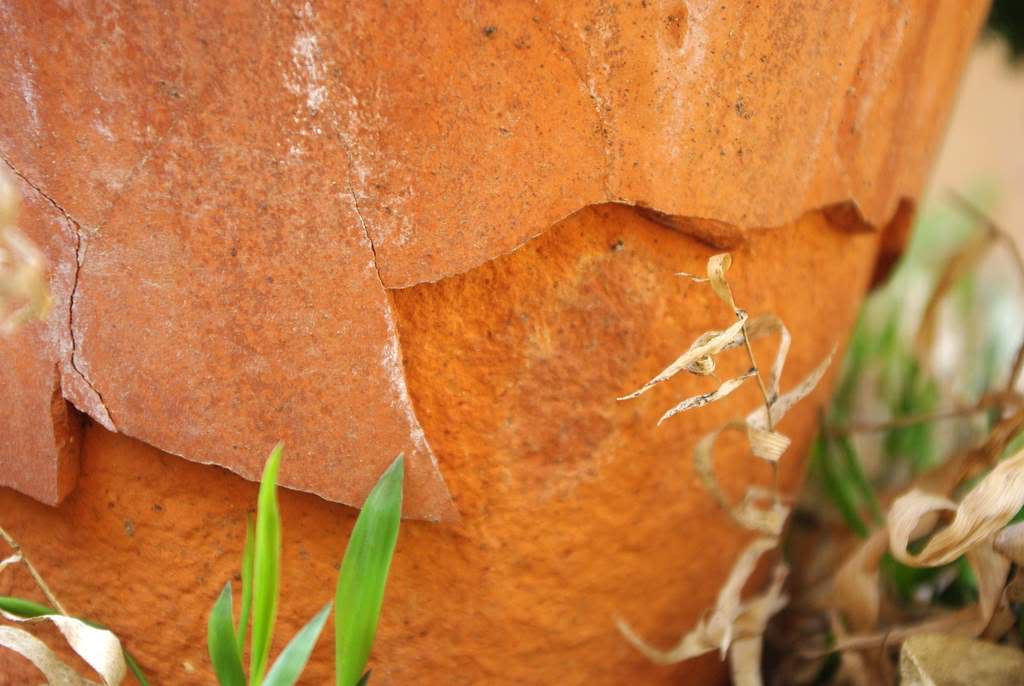
I love growing plants in containers, and I've collected a lot of them over the years. Sometimes I get beautiful ceramic pots that will last many seasons but are somewhat expensive, but I also get cheap plastic pots, and the old standard: clay pots. I have a lot of clay pots -- I just like the look of them for most plants, and they're fairly inexpensive. One reason for the lower price is that they're typically not "frost proof", which means that if you garden where winter temperatures get below freezing, these pots may not make it through the winter undamaged.


So the advice is given to remove plants and soil from clay pots, and store the empty pots where they won't collect water -- it's the expansion of freezing water, including water in soil, that cracks these pots. I do this for many of my pots, but I have others that I leave planted all winter long.

Read more...

Lazy gardening, aka "the hard way"

Today I'm going to talk about mistakes. One mistake in particular. One that I've made before, and swore I wouldn't repeat. Then I repeated it last year. It's a mistake rooted in laziness, or at least a strong lack of desire, and it involves an ornamental grass that you may have some experience with: Chasmanthium latifolium. This plant has so many different common names that I never know how to talk to people about it: "Northern sea oats", "Indian wood oats", "wild oats", "river oats" and several more regional variations. "Northern sea oats" is what it was called when I got it, and that's the name I used for a few years until I read that it doesn't grow anywhere near any sea, and is found instead in woody areas. So "Indian wood oats" sounds like the best candidate for now.


Whatever you call it, this is a great grass which grows in partial shade (like it might get "in the woods") but does better in full sun. Its key feature is the flat, oat-like seed heads it produces, which is the point of this whole post.

Read more...

The gloves after a year

I've always bought the cheapest work gloves I could find, which usually means getting something canvas, or combination thin suede/canvas. The type of gloves that are $3 a pair, or 2 pair for $5. There are three problems with those cheap gloves: they're very uncomfortable, they don't last very long, and they get dirty fast in the garden. Last March I decided to buy a pair of more expensive work gloves:


I've been using these exclusively for a year now, so I thought I'd give a report on how they're doing. If you're not one who likes to read a whole blog post or you're in a hurry today, I'll jump to the conclusion: these are great gloves, with a great price/performance ratio! Read on for details...

Read more...

Trimming some bamboos

In many parts of the world, bamboo is evergreen, and looks pretty and fresh even after winter. Some of my more cold-hardy bamboos look pretty good right now, even after the harsh winter we had in St. Louis. Leaves that were completely killed by the cold and wind will soon fall from the plant, but those plants with larger leaves that are still partially green pose more of a problem.


What to do with these leaves that are not dead, but still look quite ugly? If there are few enough of the damaged leaves, you can prune them off individually. When you have a lot of tattered leaves though, it's time to get more proactive.

Read more...

  © Blogger template Shush by Ourblogtemplates.com 2009

Back to TOP